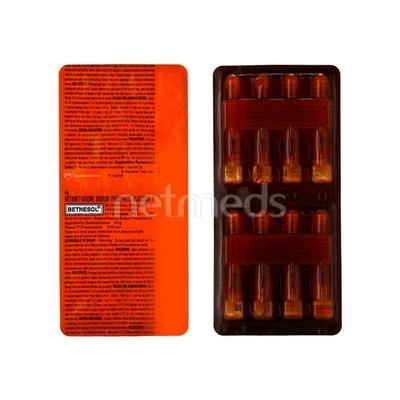


Betnesol Injection 8X1Ml

Netmeds First Membership
Quick Links
Introduction About BETNESOL INJECTION
BETNESOL INJECTION contains Betamethasone, which belongs to the group of medicines called Corticosteroids. It is used to manage asthma, severe allergic reactions, which include reactions to drugs, local inflammation (like joints, tendons, or the eye), a replacement for the body’s natural corticosteroid hormones when these are reduced or absent, severe shock (collapse) due to surgery, injury, or overwhelming infection. BETNESOL INJECTION also helps to manage organ transplant rejection following organ transplant surgery.
BETNESOL INJECTION is not recommended to use in patients having infections in which management with antibiotics is not started. Before receiving BETNESOL INJECTION, inform your doctor if you have kidney problems, liver problems, heart problems, severe mental illness or depression, epilepsy, hypertension, glaucoma, myasthenia gravis, pheochromocytoma, or diabetes.
BETNESOL INJECTION should be used with caution among women who are pregnant or breastfeeding. BETNESOL INJECTION should be used with caution in elderly patients. Consult your doctor immediately if you feel any unusual symptoms, behavioral changes, self-inflicting thoughts, etc. while receiving BETNESOL INJECTION.
Uses Of BETNESOL INJECTION
- Manage asthma
- Manage severe allergic reactions (including reactions to drugs)
- Manage local inflammation (like joints, tendons, or the eye)
- replacement for the body’s natural corticosteroid hormones (when these are reduced or absent)
- Manage severe shock due to surgery, injury, or overwhelming infection
- Prevents organ transplant rejection after transplant surgery
How BETNESOL INJECTION Works
BETNESOL INJECTION inhibits certain chemical pathways in the body which reduces the formation of substances (arachidonic acid) that causes pain. It also enhances anti-inflammatory genes like interleukin 10. Therefore, helping in reducing pain and inflammation.
How to use BETNESOL INJECTION
BETNESOL INJECTION will be given to you only by a doctor or a nurse slowly into a vein, deep into a muscle, or locally at the site of inflammation. Your doctor will decide the correct dose and duration for you depending on your age, body weight and health condition.
Side Effects Of BETNESOL INJECTION
Rare
Stop receiving BETNESOL INJECTION and contact your physician immediately if you experience any of the following side effects:
- feeling depressed and thinking about suicide
- feeling high (mania) or moods swings
- feeling anxious, having sleeping problems, having difficulty thinking or being confused, and losing the memory
- feeling, seeing, or hearing things that do not exist
- having strange and frightening thoughts
- changes in how you act or having feelings of being alone
- allergic reactions (signs include rash, swallowing or breathing problems, swelling of the lips, face, throat, or tongue)
- blistering or bleeding the skin including around the nose, lips, eyes, mouth, and genitals
- changes in skin color
- Stevens-Johnson syndrome (flu-like symptoms and fever)
- blood disorder
- heart failure (sings include rapid or irregular heartbeat, swelling of abdomen, reduced ability to exercise, swelling in ankles or hands)
- increased eye pressure (glaucoma)
- mouth and/or stomach ulcers, esophageal ulcers tending to bleed
- pancreatitis (signs include severe pain in the stomach, nausea, and vomiting, diarrhea, fever, loss of appetite, and yellowing of your skin (jaundice)
- worsening of epilepsy or schizophrenia
- swelling and fluid build-up near the eyes and brain (throbbing headache which worsens on waking up, coughing or sudden movement, patchy vision with possible lack or color vision and blind spots)
- signs of blood clot such as cramping pain, warmth and redness, shortness of breath or selling in arms and legs
How To Manage Side Effects
Nausea:
Receive BETNESOL INJECTION with, or just after meals. Stick to simple meals. Avoid eating rich or spicy foods. If the symptom does not improve, contact your physician for advice.
Vomiting:
Drink clear or ice-cold drinks, eat light, bland foods, fried, oily or sweet foods. If the symptom does not improve, contact your physician for advice.
Stomach pain:
Rest and relax. Eat and drink slowly or try to have lesser and more frequent meals. Keep a heating pad on your stomach. If the symptom does not improve, contact your physician for advice.
Warning & Precautions

Pregnancy
BETNESOL INJECTION should be used with caution in pregnant women as it may slow down the baby’s growth or may temporarily affect the baby’s body and heart movements. If you become pregnant while receiving BETNESOL INJECTION, inform your doctor and do not stop receiving the medicine unless told to do so. Consult your doctor before receiving BETNESOL INJECTION.

Breastfeeding
BETNESOL INJECTION should be used with caution in breastfeeding women as it may pass through the breast milk. Consult your doctor before receiving BETNESOL INJECTION.

Kidney
BETNESOL INJECTION should be used with caution in patients with kidney diseases. Consult your doctor before receiving BETNESOL INJECTION.

Liver
BETNESOL INJECTION should be used with caution in patients with liver diseases. Consult your doctor before receiving BETNESOL INJECTION.

Allergy
Do not receive BETNESOL INJECTION if you are allergic to Betamethasone or any of the other ingredients of this medicine.

Heart Disease
BETNESOL INJECTION should be used with caution in patients with heart diseases such as heart attack, stroke, or having a history of stroke in the family. Consult your doctor before receiving BETNESOL INJECTION.
Others
BETNESOL INJECTION is not recommended for use if you have:
- infections in which management with antibiotics is not started
Before receiving BETNESOL INJECTION, inform your doctor if you have:
- or any of your family member has severe depression or manic depression (bipolar disorder)
- severe mental illness
- stomach or duodenal ulcers
- inflammation of the bowel (diverticulitis)
- herpes infection of the eye
- tuberculosis (TB)
- epilepsy (fits)
- high blood pressure
- or any of your family members have glaucoma (raised eye pressure)
- osteoporosis (thinning of the bones)
- chickenpox, shingles, or measles, or having contact with a person having these
- diabetes or any of your family member has it
- underactive thyroid gland
- myasthenia gravis (weakness of muscles)
- had muscle wasting due to corticosteroids
- to be vaccinated or vaccinated recently
- an infection
- recently had a head injury
- blurred vision or other visual disturbances
- pheochromocytoma (a tumor involving the adrenal gland)
Use in pediatrics:
Your doctor will decide the correct dose and duration of BETNESOL INJECTION depending upon your child’s age, health condition and body weight. Consult your child’s doctor for advice.
Use in geriatrics:
BETNESOL INJECTION should be used with caution in elderly patients as it may cause serious side effects. Consult your doctor before receiving BETNESOL INJECTION.
Interactions
A. Drug-Drug interactions:
Before receiving BETNESOL INJECTION, inform your doctor if you are taking any of the following medicine:
- insulin or oral antidiabetic drugs (Ex. metformin, sitagliptin, glimepiride)
- medicine used for hypertension (Ex. amlodipine, telmisartan), heart problems (Ex. digoxin), hypotension (Ex. ephedrine)
- water tablets (diuretics) used to manage fluid retention (Ex. furosemide)
- medicines used for thinning of the blood (Ex. warfarin)
- medicines used to manage pain and inflammation such as non-steroidal anti-inflammatory drugs (Ex. ibuprofen), salicylates (Ex. aspirin)
- medicines used to manage glaucoma (Ex. acetazolamide)
- medicines used for myasthenia gravis (Ex. pyridostigmine)
- medicines used to manage tuberculosis (Ex. rifampicin, rifabutin)
- medicines used to manage epilepsy (Ex. carbamazepine, phenytoin, primidone, phenobarbitone, aminoglutethimide)
- medicines used as oral contraceptives to manage pregnancy (Ex. estradiol, levonorgestrel)
- medicines used to induce abortion in early pregnancy (Ex. mifepristone)
- growth hormones to manage conditions like growth failure and short stature (Ex. somatropin)
- medicines used as muscle relaxants (Ex. vecuronium)
- medicines used to manage infections (Ex. fluoroquinolones such as ciprofloxacin, levofloxacin)
- medicines used to improve symptoms of mental illnesses (Ex. quetiapine)
- medicines used to manage bad acne (Ex. tretinoin)
- medicines used to manage ulcers (Ex. carbenoxolone)
- amphotericin-B (used to manage fungal infections)
- theophylline (used to manage asthma and other allergic conditions)
- medicines used to manage HIV (Ex. ritonavir, cobicistat)
Overdosage:
BETNESOL INJECTION will be administered to you only by a doctor or a nurse in a hospital, and so it is unlikely to receive an overdose. However, consult your doctor or nurse if you experience any unusual symptoms or worsening of the existing condition.
Synopsis
| Drug | : |
Betamethasone |
| Pharmacological Category | : |
Corticosteroids |
| Therapeutic Indication | : |
Asthma, Severe allergic reactions, Local inflammation, As a replacement for the body’s naturally occurring corticosteroid hormones when these are reduced or absent, Severe shock, Management of organ rejection after transplant |
| Dosage Forms | : |
Tablet, Gel, Cream, Ointment, Lotion, Oral drops, Eye/Ear drops, Injection |
More Information
- Keep BETNESOL INJECTION out of reach from children
- Store BETNESOL INJECTION at a temperature not more than 25°C
FAQs About BETNESOL INJECTION
What if I forget to receive a dose of BETNESOL INJECTION?
If you forgot to have a dose of BETNESOL INJECTION, that is you missed your dose, consult with your doctor to schedule your next dose as soon as possible.
Is it safe to use BETNESOL INJECTION during pregnancy and breastfeeding?
BETNESOL INJECTION should be used with caution in pregnant women as it may slow down the baby’s growth or may temporarily affect the baby’s body and heart movements. If you become pregnant while receiving BETNESOL INJECTION, inform your doctor and do not stop receiving the medicine unless told to do so. BETNESOL INJECTION should be used with caution in breastfeeding women as it may pass through the breast milk. Consult your doctor before receiving BETNESOL INJECTION.
When BETNESOL INJECTION is not recommended?
BETNESOL INJECTION is not recommended to use in patients having infections in which management with antibiotics is not started. Consult your doctor before receiving BETNESOL INJECTION.
What is BETNESOL INJECTION is used for?
BETNESOL INJECTION contains Betamethasone which belongs to the group of medicines called Corticosteroids. It is used to manage asthma, severe allergic reactions, including reactions to drugs, local inflammation (like joints, tendons, or the eye), a replacement for the body’s naturally occurring corticosteroid hormones when these are reduced or absent and severe shock (collapse) due to surgery, injury or overwhelming infection. BETNESOL INJECTION also helps to manage organ transplant rejection following organ transplant surgery.
Can I stop receiving BETNESOL INJECTION on my own?
It is very important to keep receiving BETNESOL INJECTION till the time your doctor has prescribed it to you. Do not stop receiving it on your own, even if you feel better. If you stop receiving BETNESOL INJECTION suddenly, you may experience fever, joint and muscle pain, itching, mood changes, dizziness, loss of weight, fainting, or headache. Consult with your doctor if you wish to discontinue receiving BETNESOL INJECTION.
What precautions should I take while receiving BETNESOL INJECTION?
While getting managed with BETNESOL INJECTION, keep away from patients having chicken pox or shingles and even tell your doctor beforehand if you yourself have had them. Contact your doctor if you feel you got in touch with someone having these, as receiving BETNESOL INJECTION may worsen the condition.
Is BETNESOL INJECTION a steroid?
Yes. BETNESOL INJECTION is a potent steroid which inhibits certain chemical pathways in the body which reduces the formation of substances (arachidonic acid) that causes pain. It also enhances anti-inflammatory genes like interleukin 10. Therefore, helping in reducing pain and inflammation.
References
1. KD Tripathi. Corticosteroids. Drugs Essentials of medical pharmacology. Seventh edition. 2013. Page – 289.
2. Komal Gaur and Barna Ganguly. Effect of Single Dose Betamethasone Administration in Pregnancy on Maternal and Newborn Parameters. Journal of Clinical and Diagnostic Research. NIH National Library of Medicine, National center for biotechnology information. Pubmed Central. May 2017. [Accessed on 18th August 2022] https://www.ncbi.nlm.nih.gov/pmc/articles/PMC5483699/
3. Manish R Pandya, Kalpana Khandheriya, Vinay Trivedi, Khushbu Patel. Antenatal injection betamethasone- A fetal lung warrior. Indian Journal of Obstetrics and Gynecology Research. June 2021. [Accessed on 18th August 2021] https://www.ijogr.org/media/journals/IndianJObstetGynecolRes-8-2-255-258.pd
4. Betamethasone. NIH National Library of Medicine, National center for biotechnology information. Pubchem. [Revised in August 2022] [Accessed on 18th August 2022] https://pubchem.ncbi.nlm.nih.gov/compound/Betamethasone
5. RPH Pharmaceuticals AB. Electronic Medicines Compendium (EMC). [Revised in November 2021] [Accessed on 18th August 2022] https://www.medicines.org.uk/emc/files/pil.9097.pdf
Useful Diagnostic Tests
- Absolute Eosinophil Count
- Peripheral Smear Examination
- Total IgE
Author Details